Telemetry
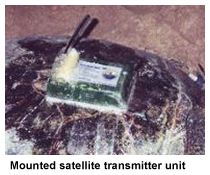
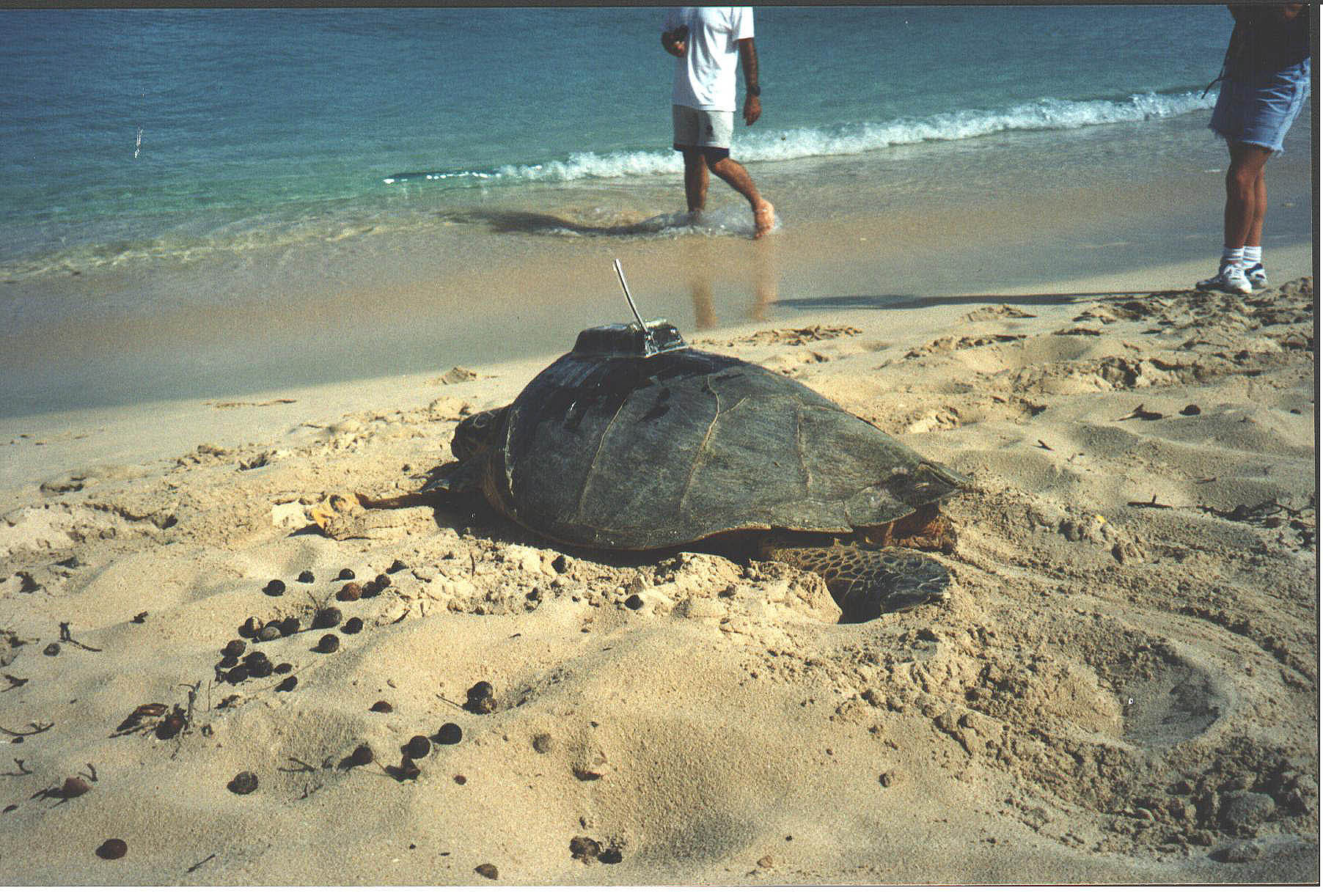
Adult female hawksbill turtles (Eretmochelys imbricata) have been fitted with satellite transmitters in order to investigate post-nesting movements from the beaches of Barbados to their foraging grounds elsewhere in the Caribbean and their movements along Barbados’s coasts during inter-nesting intervals (i.e. the time periods between nesting emergences within a season). This work began in the 1998 as part of a Caribbean-wide hawksbill research satellite tracking project.
Since then, six animals have been followed from Barbados to their foraging grounds, with females travelling for periods of between 7 and 18 days to reach foraging grounds in Dominica, Grenada, Trinidad, Venezuela, Dominican Republic and Guadeloupe. Straight-line travel distances ranged from 200 to more than 1000 km. One animal has been tracked in two different nesting seasons and she returned on each occasion to the same foraging ground, suggesting that hawksbills are not only faithful to their nesting beaches, but also their foraging grounds.