Rescue and Rehabilitation

Adult turtles

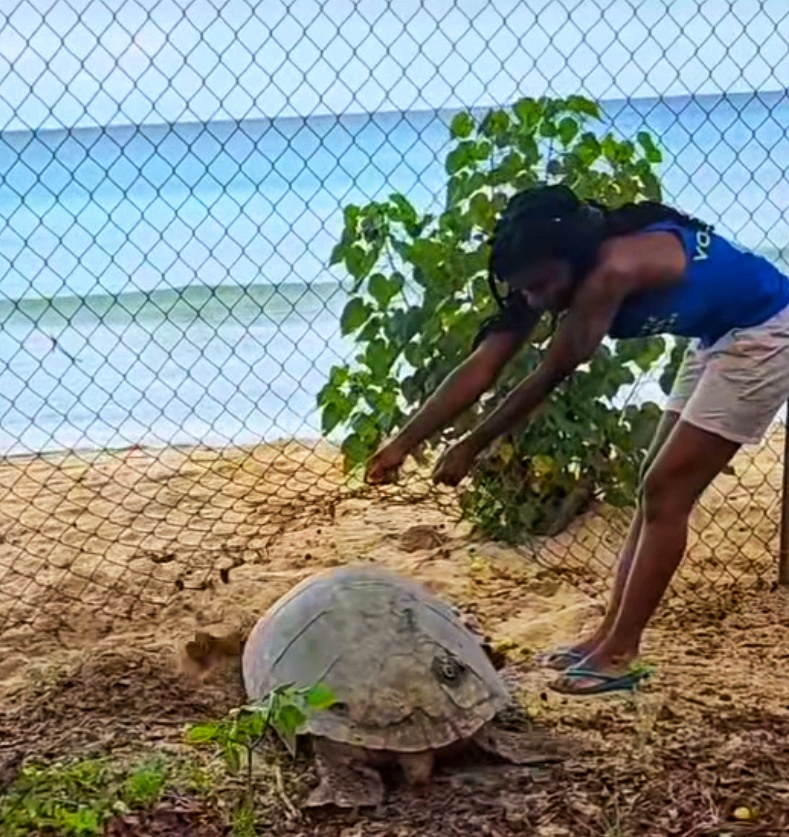
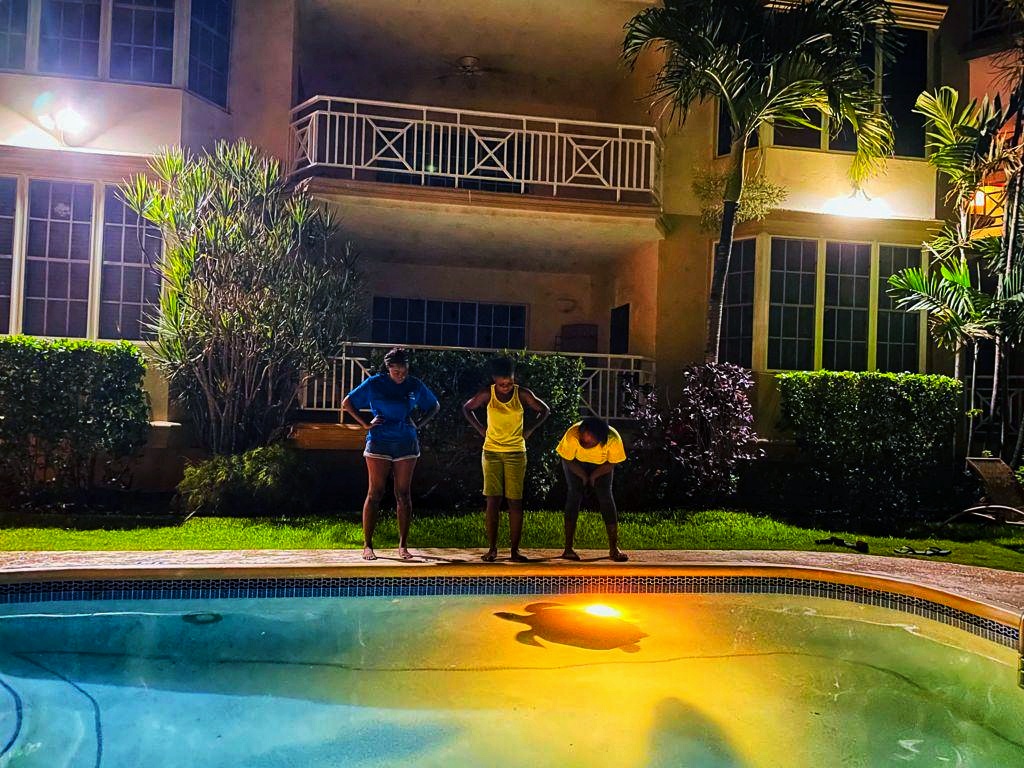
Nesting female sea turtles are occasionally disoriented by lights as they make their way back to the sea. If this happens, they may wander onto hotel grounds and into swimming pools, construction sites or drains close to the beach. If a narrow beach is close to a main road, female sea turtles may cross the road in pursuit of suitable nesting habitat.

An adult turtle that has wandered inland may become trapped behind a sea wall, or may be injured if she falls into a drained swimming pool or is hit by a car. Volunteers from the Barbados Sea Turtle Project rescue trapped or disoriented nesting female turtles and guide them back to the sea. If a turtle is injured, we ensure that she receives necessary treatment with the assistance of Dr. Gus Reader, a local veterinarian.
Hatchling turtles

Hatchling sea turtles are strongly attracted to lights. This is because they instinctively seek out the brightest horizon, which under natural conditions would be the sea. However, these turtles often crawl landward toward the lights at hotels and condominiums, and may even cross main roads while crawling toward street lights.

If the volunteers from the Barbados Sea Turtle Project find disoriented sea turtle hatchlings, we collect them and release them at a dark beach on the same day or night when they were collected.

Our volunteers make every attempt to release hatchlings as close to the beach where they were collected as possible. If hotel lights that shine onto the beach can be turned off, they can often be released at the same beach. However, this may not always be possible and ongoing coastal development in Barbados is making suitably dark beaches increasingly difficult to find.

Nest protection and relocation

It is important that the site where a sea turtle has nested will be safe for the duration of the incubation period (approximately 60-days). Since moving a sea turtle nest reduces its chance of success, eggs should not be moved unless they are likely to be destroyed at their original location. If the eggs are not safe due to washout by high wave activity, predation by dogs or mongooses, or if they are in an area of high foot or vehicular traffic, our volunteers will carefully relocate them to a safer area.

Juvenile and foraging turtles

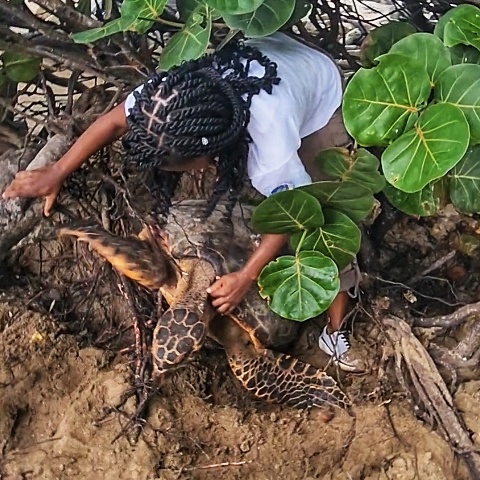
Many species of sea turtles migrate through Barbados’ waters and forage around the island throughout the year. Occasionally, these turtles find themselves in dangerous situations.

Entanglement in abandoned fishing gear can result in reduction of mobility, limb amputation or drowning, while swallowing fishing hooks or garbage such as deflated balloons, plastic bags and bottle caps can block the digestive tract, making feeding extremely difficult. Boat strikes can result in serious injuries as both the hull and propeller of a boat can damage the shell, lungs and spine of a sea turtle.

Debilitated turtles are often weak and unable to swim against strong currents and may become stranded in shallow water. The Barbados Sea Turtle Project works to rehabilitate stranded sea turtles with the assistance of Dr. Gus Reader. At the Central Veterinary Clinic, turtles can be X-rayed and have foreign objects surgically removed. In most cases, rehabilitated turtles are able to make a full recovery and can be released close to shore or at sea if necessary.

Get in touch

The Barbados Sea Turtle Projecr

Wildey Great House
Wildey, St. Michael Barbados

thebstp@wildisletrust.org

(246) 230-0142

Newsletter

Coming soon!
Follow Us

© Your Site Name. All Rights Reserved.

Designed by HTML Codex. Distributed by ThemeWagon.