Genetic analysis
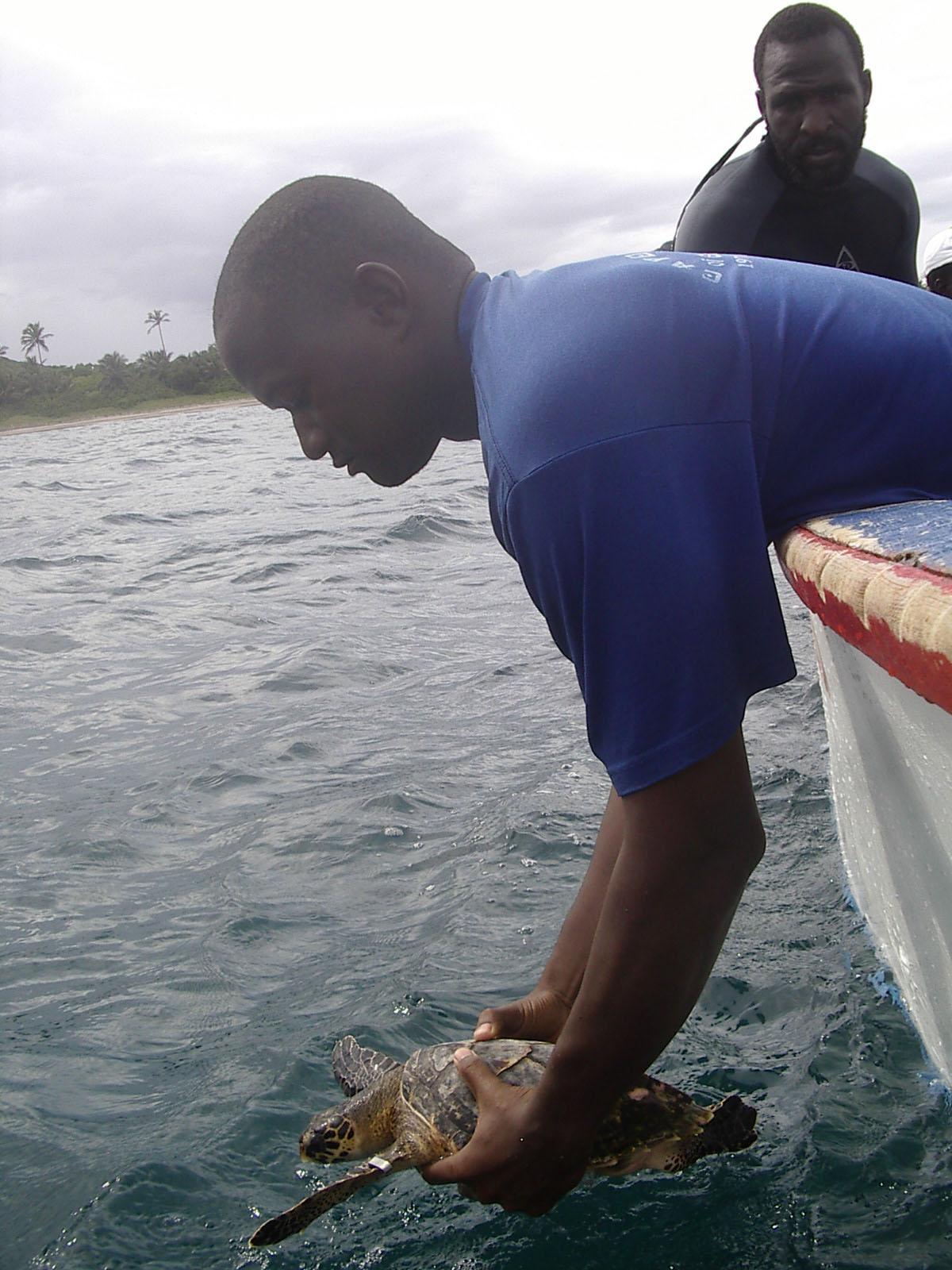
As part of our conservation activities, the Barbados Sea Turtle Project collects tissue samples from both nesting adult and foraging juvenile sea turtles. DNA extracted from these samples can be used to investigate the population structure of the nesting and foraging turtles of Barbados.
Hawksbill turtles
Genetic analyses have shown that the nesting populations of Caribbean hawksbill turtles are genetically distinct (Bass et al., 1996), while the foraging grounds are occupied by individuals from numerous nesting populations (Bowen et al., 1996; Bowen et al., 2007). Because of this, the genetic composition of nesting populations can be used to estimate their contribution to regional foraging aggregations.
A recent study in Barbados (Browne et al., 2009) has revealed a high level of structuring within the island's hawksbill nesting population. The population of the leeward (west) coast is genetically distinct from that on the windward (east) coast. As a result, the turtles nesting on each coast can be considered as separate populations. This study also revealed that the Barbados nesting population, the second largest in the Wider Caribbean, contributes more to regional foraging aggregations, ie. the animals seen around other islands, than was previously estimated.
Green turtles
Analysis of genetic material from the local green turtle population has revealed that the green turtles seen foraging around Barbados are from Ascension Island, Aves (Bird) Island, Surinam, Costa Rica, Florida and Mexico.
These results emphasise the importance of cooperation between Barbados and the different sea turtle range states in order to ensure the success of domestic conservation measures, as turtles protected under Barbadian law may migrate to waters where they can be legally harvested, while turtles from other countries use Barbados as their feeding ground.